


Raymond grinding mill
2026/03/10 14:06:03
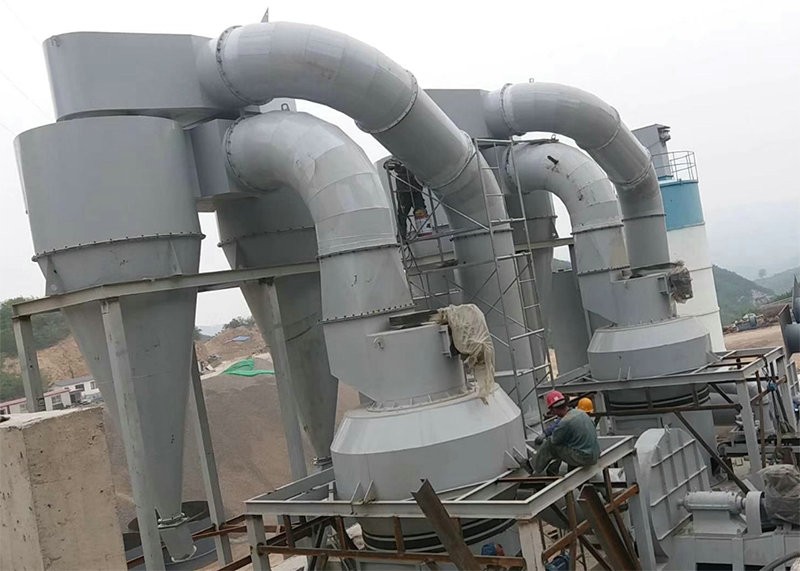
Structural Features of Raymond grinding mills:
1. Raymond grinding mills feature a three-dimensional structure, occupying a small area and offering strong integration, forming an independent production system from raw materials to finished powder.
2. The finished powder has uniform fineness and a sieve passing rate of 99%, a feature difficult to achieve with other grinding equipment.
3. The main transmission device of the grinding mill adopts a sealed gearbox and pulleys, ensuring smooth transmission and reliable operation.
4. Key components of the Raymond mill are made of high-quality steel, and wear-resistant parts are made of high-performance wear-resistant materials, resulting in high wear resistance and reliable operation.
5. The electrical system adopts centralized control, allowing for largely unmanned operation in the grinding workshop and facilitating maintenance. Working Principle
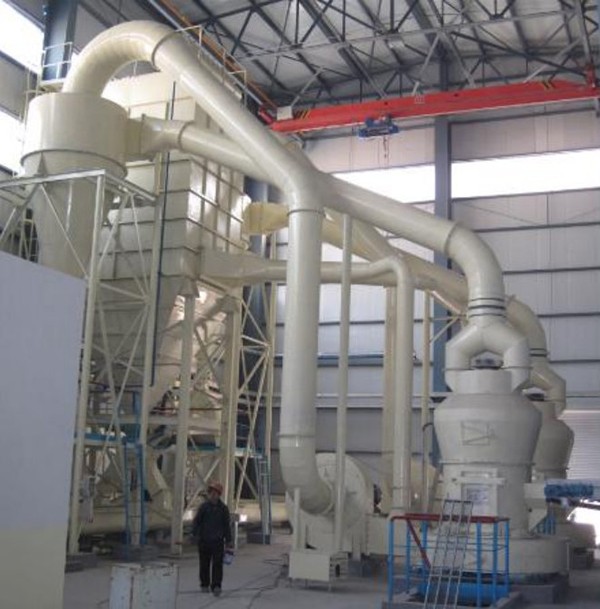
The Raymond mill works by having grinding rollers tightly press against the grinding ring under centrifugal force. Material is scooped up by a shovel and fed between the rollers and the grinding ring. Under the crushing pressure, the material is broken into powder. Then, a blower blows the powder through an analyzer. Material meeting the required fineness passes through the analyzer, while material that doesn't meet the requirements returns to the grinding chamber for further grinding. The material passing through the analyzer is then separated and collected by a cyclone separator. Exhaust air is filtered through industrial filter cloth, resulting in a single-stage powder production process.
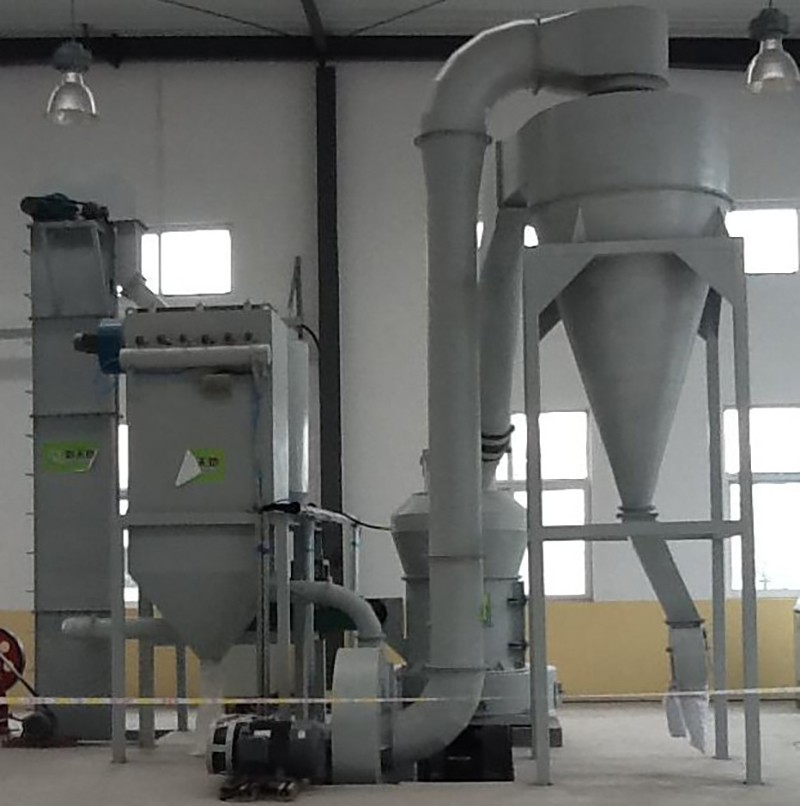
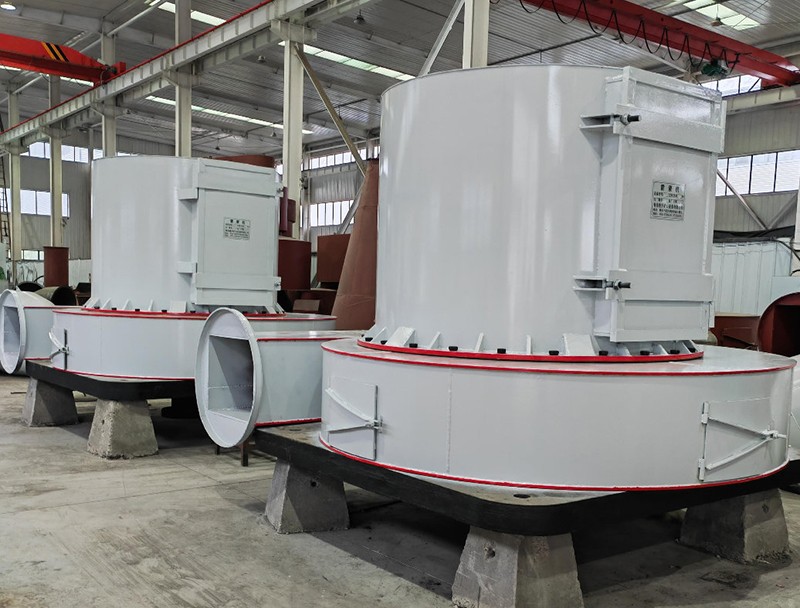
The complete Raymond mill system consists of the main unit, analyzer (powder separator), piping, blower, finished product cyclone separator, jaw crusher, bucket elevator, belt feeder, electrical control system, and motor. The main unit comprises a base, inlet volute, shovel, grinding rollers, grinding ring, casing, and motor.
The complete working process of a Raymond mill (material grinding process): Large pieces of material are crushed to the required particle size by a jaw crusher, then conveyed to a storage hopper by an elevator, and then continuously and evenly fed into the main grinding chamber by a belt feeder for grinding. The ground powder is carried away by the airflow from the blower. After classification by the classifier, powder that meets the fineness requirements enters the large cyclone collector with the airflow through pipes for separation and collection, and is then discharged through the powder pipe as the finished powder. The airflow is then drawn back into the blower through the return air pipe at the top of the large cyclone collector. The entire airflow system of this machine is a closed loop, circulating under positive and negative pressure conditions.
Because the material being ground has a certain moisture content, the heat generated during grinding causes the gas inside the mill to evaporate, altering the airflow. Additionally, loose connections in the various pipes allow outside gas to be drawn in, increasing the circulating airflow and leading to reduced powder output or even mill explosion. To address this, the new European-style trapezoidal mill has explosion-proof measures installed on the upper part of the machine, minimizing the risk of accidental damage from a Raymond mill explosion. Furthermore, this situation can be addressed by adjusting the excess air duct between the fan and the main unit to achieve airflow balance, directing excess gas into a small cyclone collector to collect the fine powder carried by the excess gas. Finally, the exhaust gas is discharged into the atmosphere through the upper exhaust pipe of the small cyclone collector or directed into a dust collector for purification. However, this method requires highly skilled operators and necessitates timely detection and adjustment. The working principle of a Raymond mill is as follows: Grinding rollers are pressed tightly against a grinding ring under centrifugal force. Material is scooped up by a shovel and fed between the grinding rollers and the grinding ring. Under the pressure of the rollers, the material is crushed into powder. Then, a blower blows the powdered material through an analyzer. Material that meets the fineness requirements passes through the analyzer, while material that does not meet the requirements returns to the grinding chamber for further grinding. The material passing through the analyzer is then separated and collected by a cyclone separator. Exhaust air is collected using a pulse dust collector.
The Raymond mill is suitable for processing hundreds of materials, including barite, calcite, potassium feldspar, limestone, talc, white stone, and gypsum, with a Mohs hardness not exceeding 9.3 and a moisture content below 6%. These materials are non-flammable and non-explosive minerals, chemical products, and building materials. The particle size can be adjusted arbitrarily within the range of 40–400 mesh. This product series is divided into three main series and more than ten models, catering to different materials, fineness, and output requirements: high-pressure micro-powder mills, high-pressure suspension roller mills, and ordinary Raymond mills.
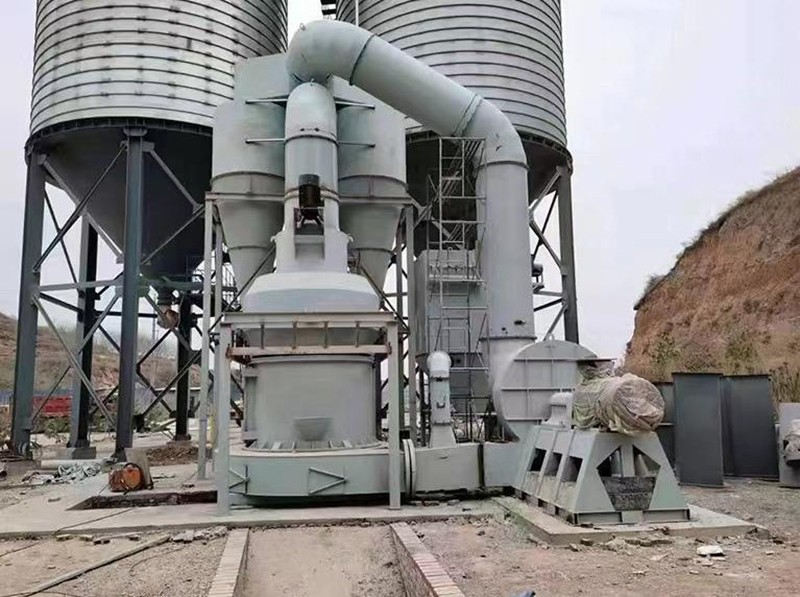
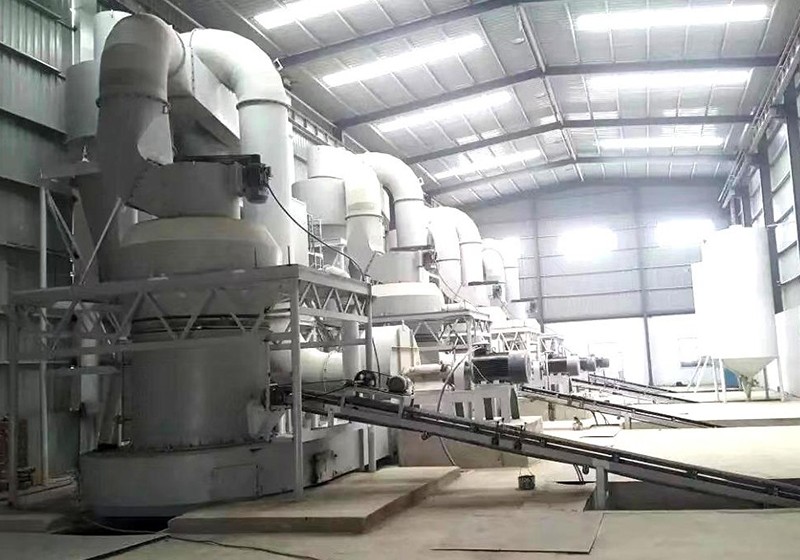
(I) Preparations before Raymond Grinding Mill Installation
1. Before installation at the Raymond mill site, it should be properly stored. Exposed surfaces must be coated with anti-rust grease and protected from direct sunlight and rain to prevent rust and water ingress. A maintenance system should be established.
2. The plant and foundation should have sufficient height and installation space according to the Raymond mill installation foundation drawing. The Raymond mill foundation should use high-grade cement and must be reinforced with steel bars before pouring. Conduit or cable trenches should be pre-installed. After the cement foundation is poured, a 15-day curing period is required.
3. A 3-5 ton lifting tool should be provided for Raymond mill installation and maintenance. 4. For Raymond mills that have been in use for more than 6 months since leaving the factory, the main shaft system, transmission device, grinding roller device, and analyzer oil tank should be cleaned and inspected. After cleaning and inspection, sufficient lubricating oil should be added to each component.
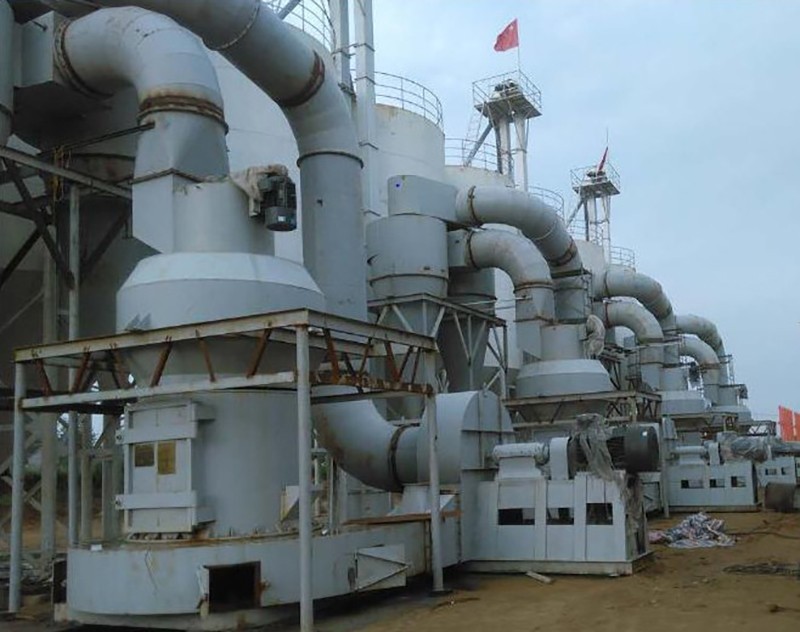
(II) Raymond Grinding Mill Installation
1. First, hoist the transmission device base into the pit and level it, paying attention to controlling a certain height. Then, use a level to correct the upper plane, and simultaneously install the transmission device on the upper plane and fix it with bolts.
2. Raymond mill main unit installation. Before installation, rubber anti-vibration pads should be placed between the lower plane of the base and the cement foundation, and between the anchor bolt connections. Then, use a frame level to correct the base, with the correction points being the four points of the crosshairs. Simultaneously, adjust the two halves of the coupling; their misalignment should be less than 1 mm, and the non-parallelism should not exceed 1 mm.
3. The position and height of the piping should be installed according to the general drawing, and should not be arbitrarily changed or increased. All pipe connections should be sealed, and there should be no air leakage after tightening. Electrical equipment should be accurate and reliable. A test run should be conducted after all components are installed.
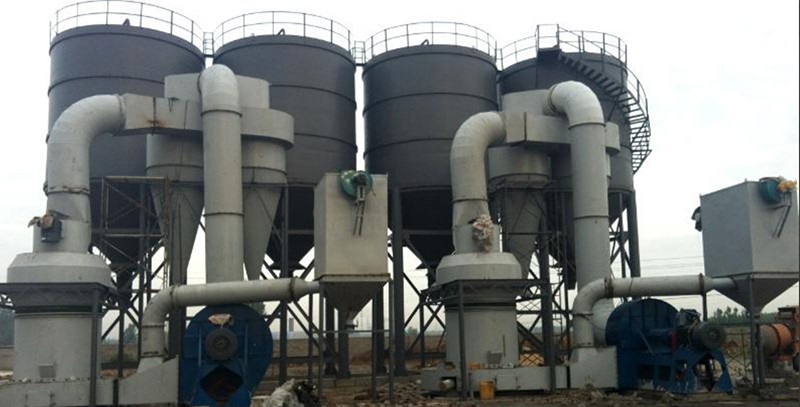
(III) Raymond Grinding Mill Commissioning
(No-load Test Run)
1. No-load test run: Before the no-load test run, the grinding roller assembly should be securely fastened with wire mesh rope to prevent contact and impact between the grinding roller and the grinding ring. Then, the main unit should run without load for at least 1 hour. The main unit should operate smoothly, and the oil temperature inside the casing should not exceed 80℃, with a temperature rise not exceeding 40℃. The rotation direction of the main unit and the analyzer is shown in Figure 4.
2. The blower should be started without load. Load should be applied only after normal operation. Observe its smooth operation, ensuring no abnormal noise or vibration. The maximum temperature of the rolling bearings should not exceed 70℃, and the temperature rise should not exceed 35℃.
3. Load test run: The test run should last at least 8 hours. After the Raymond mill is working normally, there should be no abnormal noise from the entire machine, and no air leakage at any pipe connections. After the test run, tighten all fasteners again before putting it into normal use. Operating Procedures:
Before Starting the Raymond Mill:
Check that all inspection doors are tightly closed, check that the jaw plate clearance of the crusher meets the feed particle size requirements, and adjust the analyzer speed to achieve a near-finished product particle size. Finally, start the mill in the following sequence:
1. Start the bucket elevator;
2. Start the jaw crusher;
3. After the hopper contains material, start the analyzer;
4. Start the blower (start under no-load, and load after it is running normally);
5. Start the Raymond mill main unit, and immediately start the belt feeder at the same time. The Raymond mill grinding operation begins at this point.
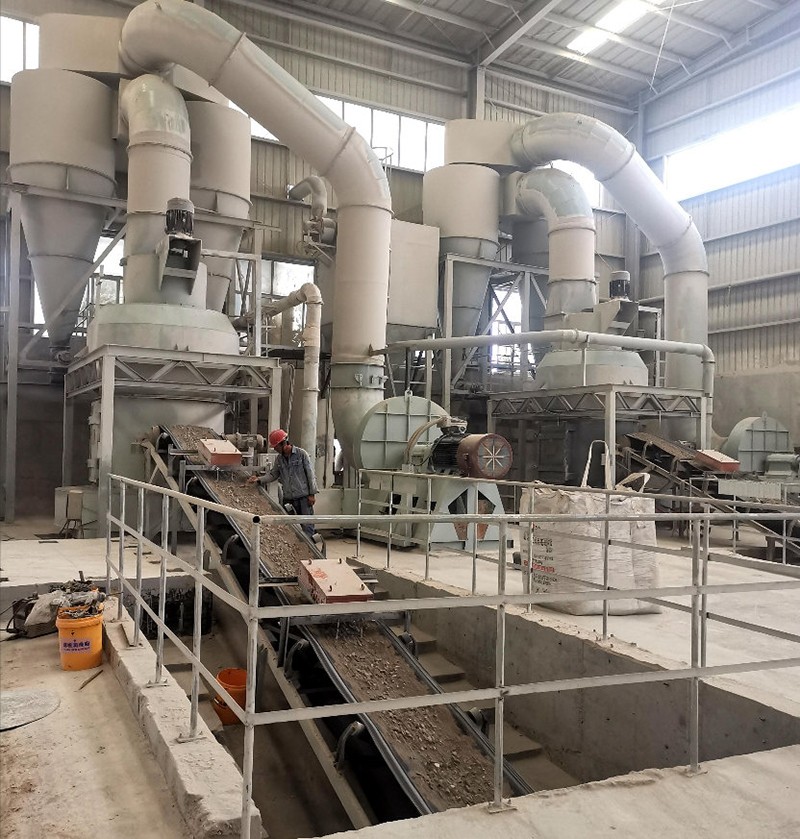
Raymond Mill Operating Sequence:
Simplified operating sequence is as follows: Start-up: Elevator → Crusher → Analyzer → Blower → Main Unit → Feeder. Raymond Mill Shutdown Sequence
When shutting down a Raymond mill, the following sequence should be followed:
1. First, shut down the feeder to stop feeding.
2. After approximately one minute, stop the main unit.
3. After blowing away any remaining powder, stop the blower.
4. Finally, shut down the classifier.
A simplified shutdown sequence for a Raymond mill is: Feeder → Main Unit → Blower → Classifier.
Note: After the elevator has transported a certain amount of material to the hopper, stop the crusher first, then stop the elevator. This should be adjusted based on the current material level.
5. Do not add oil arbitrarily during normal operation of the Raymond mill. To ensure production safety, if any abnormal noise occurs in any part of the mill, or if the load suddenly increases, immediately stop the mill for inspection and troubleshooting to prevent major accidents. Before restarting, all remaining material in the mill must be removed; otherwise, excessive current will affect startup.
Maintenance and Care:
1. During use, the Raymond mill should be supervised by designated personnel. Operators must possess a certain level of technical expertise. 1. Before installation, operators must receive necessary technical training to understand the mill's principles and performance, and be familiar with operating procedures.
2. To ensure the Raymond mill operates normally, a "Maintenance and Safe Operation System" should be established to guarantee its long-term safe operation. Necessary maintenance tools, lubricating grease, and appropriate spare parts should also be available.
3. After a period of use, the Raymond mill should be inspected and repaired. Wear parts such as grinding rollers, grinding rings, and scrapers should be replaced. Before and after use, the connecting bolts and nuts of the grinding roller assembly should be carefully inspected for looseness, and the lubricating grease should be adequately added.
4. When replacing the grinding rollers after approximately 500 hours of use, all rolling bearings inside the roller sleeve must be cleaned. Damaged parts should be replaced promptly. Lubrication tools include a manual grease pump and a grease gun. Troubleshooting
The following are common troubleshooting methods for Raymond mills during use:
Common Fault
1: No powder output or low output
Causes: (1) The powder lock is not properly adjusted, resulting in poor sealing and backflow of powder. (2) The shovel blade is worn and cannot lift the material.
Solutions: (1) Check and adjust the powder lock seal, and repair any leaks. (2) Replace the shovel blade.
Common Fault 2: Finished powder is too coarse or too fine
Causes: (1) The classifier blades are severely worn and cannot perform the classification function. (2) The fan airflow is inappropriate.
Solutions: (1) Replace the blades and appropriately reduce the fan airflow to solve the problem of excessive coarseness. (2) For excessive fineness, increase the inlet airflow.
Common Fault 3: Main unit current increases, fan current decreases
Causes: (1) Overfeeding, the air duct is blocked by powder, the exhaust is not smooth, the circulating airflow heats up, causing the main unit current to rise, the machine temperature to rise, and the fan current to decrease. Troubleshooting methods: (1) Reduce the feed rate and remove accumulated powder from the air duct. (2) Open the exhaust air duct valve to control the material temperature below 6℃.
Common Fault 4: Loud Noise and Significant Vibration of the Main Unit
Causes: (1) Low feed rate. Severely worn scraper blades cannot scrape up material, and the foundation bolts are loose. (2) Hard material with large impact, or no material layer. (3) Severe deformation of the grinding roller and grinding ring.
Troubleshooting methods: (1) Adjust the feed rate and replace the scraper blades. (2) Change the feed particle size. (3) Replace the grinding roller and grinding ring.
Common Fault 5: Fan Vibration
Causes: (1) Powder accumulation or uneven wear on the fan blades. (2) Loose foundation bolts.
Troubleshooting methods: (1) Remove accumulated powder from the blades or replace the blades. (2) Tighten the foundation bolts. Common Fault 6: Overheating of Transmission Device and Analyzer Oil Tank
Causes: (1) High oil viscosity and thick oil layer prevent the threaded pump from pumping oil, resulting in insufficient oil in the upper bearing.
Solutions: (1) Check if the oil grade and viscosity meet the requirements. (2) Check the direction of the analyzer's rotation. Common Fault 7: Damaged Grinding Roller Device Powder Inlet Bearing
Causes: (1) Oil shortage or damaged seals. (2) Lack of maintenance and cleaning over a long period.
Solutions: (1) Add oil at the specified time. (2) Clean and replace oil seals regularly.
For more information about Raymond Grinding Mill, stay tuned!


