


Classification of Raymond Mill
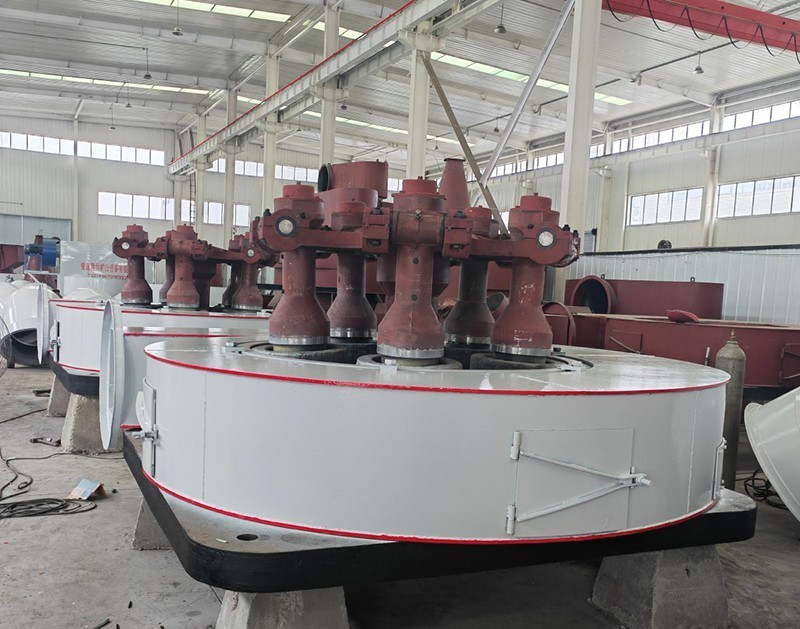
As a commonly used suspended roller fine grinding equipment,Raymond Mill are mainly classified based on four core dimensions:model specification,structural improvement,finished product fineness,and application scenario.Different classifications correspond to different performance characteristics and applicable requirements.The specific classifications are as follows:
I.Classification by Model Specification(Most Commonly Used Classification Method)
Based on the"R-type"as the basic model,different specifications are derived to meet different output requirements.The core differences lie in the number of grinding rollers,main machine size,and processing capacity:
2.Medium-sized Raymond Mill:Such as R2150,R2615,etc.It has 4-5 grinding rollers,moderate processing capacity,balancing efficiency and energy consumption.It is widely used in metallurgy,building materials,mining and other fields,and can process more than 280 kinds of materials such as gypsum,talc,and calcite.
3.Large-sized Raymond Mill:Such as R3016,R4019,etc.It has 5-6 grinding rollers,a more stable main machine structure,and is equipped with a large-scale analyzer and blower.It has a large processing capacity,suitable for large-scale production,can meet the requirements of high output and continuous powder making,and is suitable for large-scale building materials and chemical production lines.
II.Classification by Structural Improvement(Upgraded and Optimized Based on the Basic Model)
According to the direction of technological upgrading,it is divided into basic model and upgraded model.The core differences lie in grinding pressure,sealing performance and energy consumption:
2.High-pressure Suspended Roller Raymond Mill:Upgraded on the basis of the ordinary model,the rolling pressure of the grinding rollers on materials is increased by high-pressure springs(which can be increased by 800-1200kg).Under the same power condition,the output is increased by 20-30%,the finished product particle size range is wider(30-1000 mesh),the sealing performance is better,and it can process materials with Mohs hardness below 9.3,suitable for higher requirements of powder making scenarios,such as quartz,feldspar and other material processing.
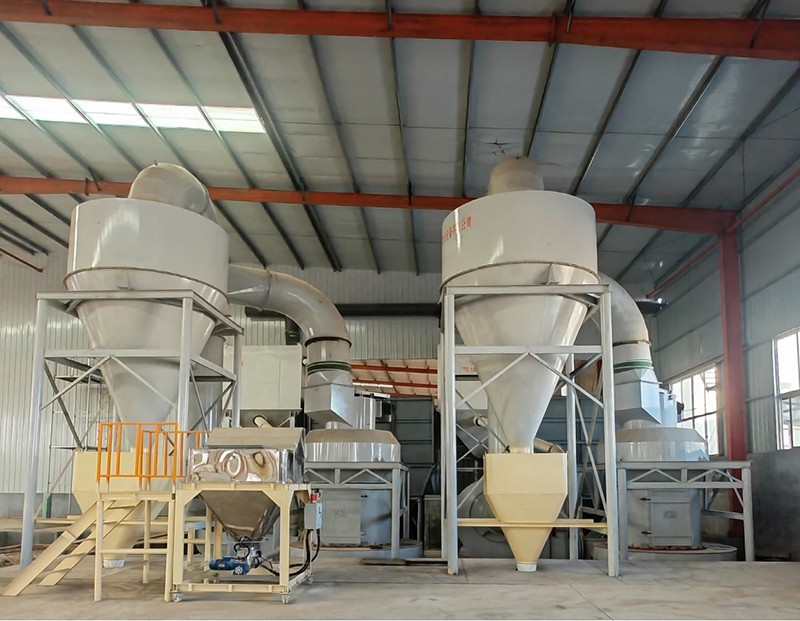
3.Ultra-fine Raymond Mill:Modified and equipped with a fine classifier,it can produce fine powder with d97=15-30 microns(500-800 mesh),solving the problems of low fine powder content and small specific surface area of ordinary Raymond Mills.It is suitable for the fine grinding of materials that require fine powder grinding such as heavy calcium carbonate,and is widely used in the field of powder materials.
III.Classification by Finished Product Fineness(Adapting to Different Application Requirements)
According to the fineness level of the ground materials,it is divided into three categories,corresponding to the use requirements of different industries:
2.Fine Powder Raymond Mill:The finished product fineness is 10-44 microns(325-1250 mesh),suitable for industries such as chemical industry,coatings,and rubber,such as kaolin and bentonite fine grinding.It needs to be equipped with a precision analyzer to control the fineness uniformity,and the screening rate is stable above 99%.
3.Ultra-fine Raymond Mill:The finished product fineness is 1-10 microns(1250-10000 mesh).After special structural modification,it has high grinding precision,suitable for high-end powder materials,medicine,food and other fields,and can process high-purity and fine-grained powder products,which needs to be equipped with efficient dust removal and classification systems.
IV.Classification by Application Scenario(Divided by the Characteristics of Processed Materials)
According to the adapted material types and industries,it is divided into general-purpose type and special-purpose type:
1.General-purpose Raymond Mill:It has the widest application range and can process non-flammable and explosive minerals and chemical raw materials with Mohs hardness below 9.3 and humidity below 6%,such as more than 280 kinds of materials such as calcite,limestone,potassium feldspar,and marble.It is widely used in metallurgy,building materials,chemical industry,mining and other fields.
2.Special-purpose Raymond Mill:Optimized and designed for specific materials,such as ore-specific Raymond Mill(suitable for barite,iron ore,etc.),non-metallic mineral-specific Raymond Mill(suitable for talc,kaolin,etc.),and chemical raw material-specific Raymond Mill(suitable for activated carbon,activated clay,etc.).It is specially optimized in grinding efficiency and wear resistance to adapt to the processing characteristics of specific materials.


