


What is the difference between hydrated lime and lime?
In the fields of building materials,industrial production,and environmental governance,the term"lime"is often used in a generalized manner,but strictly speaking,it includes two different substances:quicklime and hydrated lime.Although both belong to calcium based compounds,there are significant differences in their chemical properties,preparation processes,and application scenarios.The essential difference between hydrated lime and lime lies in the differences in chemical composition and preparation processes,which in turn determine their differentiation in physical properties and application scenarios.Lime has the core advantages of strong alkalinity and high temperature reactivity,and is used in heavy industries such as metallurgy and building materials;Hydrated lime plays a key role in refined environments such as environmental protection,food,and medicine due to its gelling properties and biocompatibility.Understanding this difference not only helps optimize process selection,but also provides theoretical basis for safety production and cost control.
Chemical essence:
Lime:Chemical formula CaO,formed by the ionic bond between calcium(Ca)and oxygen(O),belongs to alkaline oxides.In its molecular structure,calcium ions(Ca²⁺)and oxygen ions(O²⁻)are arranged in a 1:1 ratio,forming cubic crystals with strong water absorption.
Hydrated lime:with the chemical formula Ca(OH)₂,it is a strong alkali formed by the coordination bond between calcium ions and two hydroxyl groups(OH⁻).Its molecular structure is layered,with calcium ions located in octahedra formed by hydroxyl groups.The layers are connected by hydrogen bonds,giving it unique gelling and solubility properties.
Preparation of quicklime
Obtained by high-temperature calcination of limestone(CaCO3),the reaction equation is:
CaCO₃→CaO+CO₂↑
The calcination temperature needs to be controlled between 900-1200℃.If it is too high,it will cause the lime grains to grow and the activity to decrease.If it is too low,there will be residual undecomposed calcium carbonate(undercooked).Rotary kilns or vertical kilns are commonly used in industry to achieve continuous production,and product activity(reaction rate with water)is a key quality indicator.
Preparation of hydrated lime
Mix quicklime with water in a mass ratio of 1:3 to undergo exothermic hydration reaction:
CaO+H₂O→Ca(OH)₂+65.2kJ/mol
The reaction is divided into two steps:
Rapid surface hydration:generates a slightly soluble Ca(OH)₂coating layer;
Slow diffusion infiltration:Water enters the interior through capillary pores and continues to react until complete.
In industry,the amount of water added and stirring speed are controlled by a digestion machine to avoid local overheating and agglomeration(overburning).The product needs to be aged(left to stand for more than 14 days)to eliminate burnt lime particles.
Key difference:Lime is a direct product of limestone calcination,while hydrated lime is a secondary product of lime hydration.There is a significant difference in energy consumption and process complexity between the two preparations.
Characteristic quicklime(CaO)and hydrated lime(Ca(OH)₂)
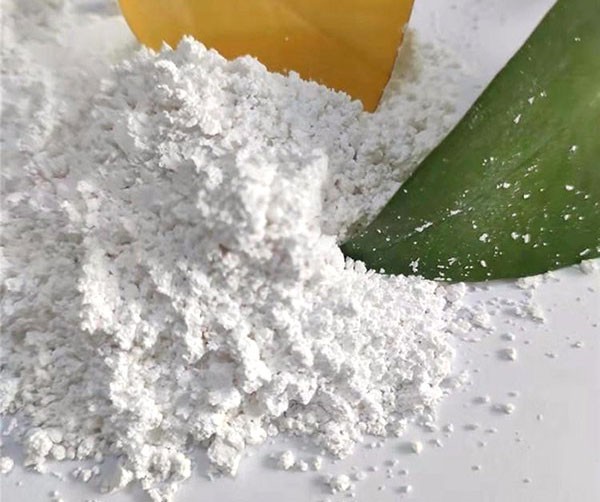
Appearance:white or gray white block/powder,loose and porous white powder,delicate and particle free
Density 3.1-3.4g/cm³2.24g/cm³
PH value 12.4(1%aqueous solution)12.8(saturated solution)
Gelability does not form colloids when mixed with water,gradually hardening
Key difference:The loose and porous structure of quicklime is derived from the pores formed by the escape of CO₂during the calcination process,while the gelling property of quicklime is derived from its layered crystal structure and hydrogen bonding,allowing it to adsorb water and form a hardened body.
Application scenarios
Typical applications of quicklime
Building materials:Lime mortar(CaO+H₂O→Ca(OH)₂+sand)is prepared as a binding material for masonry plastering,but due to poor water resistance,it is now mostly replaced by cement.
Steel smelting:used as a slag forming agent to remove impurities such as phosphorus and sulfur(reaction formula:2P+5CaO+3CaO·P₂O₅→3CaO·P₂O₅).
Wastewater treatment:Adjust the pH value to alkaline(8.3-9.5)to promote the formation of hydroxide precipitation of heavy metal ions(such as Fe³⁺→Fe(OH)∝↓).
Agricultural improvement:Neutralize acidic soil(pH<5.5),but control the dosage(50-100kg per acre)to avoid root burning.
Flue gas desulfurization:reacts with SO₂to generate calcium sulfite(Ca(OH)₂+SO₂→CaSO3+H₂O),which is further oxidized to gypsum for use in building materials.
Wastewater treatment:Settling heavy metals(such as Cu²⁺+Ca(OH)₂→Cu(OH)₂↓+Ca²⁺),or using them as coagulants to improve water quality.
Food industry:used as an acidity regulator(E526)for brewing,sugar production,and tofu solidification.
In the field of medicine:prepare Ringer's solution(a physiological saline substitute containing Ca(OH)₂)or topical disinfectant.
Archaeological protection:used for deacidification treatment in cultural relic restoration.
Key difference:Quicklime is mostly used in scenarios that require strong alkalinity or high-temperature reactions,while hydrated lime is more suitable for fields that come into contact with organisms or food due to its lower corrosiveness.
In summary,the vast majority of lime that we directly come into contact with and use in our daily lives is hydrated lime.And quicklime is mainly used as an industrial raw material and desiccant.
Chemical essence:
Lime:Chemical formula CaO,formed by the ionic bond between calcium(Ca)and oxygen(O),belongs to alkaline oxides.In its molecular structure,calcium ions(Ca²⁺)and oxygen ions(O²⁻)are arranged in a 1:1 ratio,forming cubic crystals with strong water absorption.
Hydrated lime:with the chemical formula Ca(OH)₂,it is a strong alkali formed by the coordination bond between calcium ions and two hydroxyl groups(OH⁻).Its molecular structure is layered,with calcium ions located in octahedra formed by hydroxyl groups.The layers are connected by hydrogen bonds,giving it unique gelling and solubility properties.
Key difference:Quicklime is an oxide,while hydrated lime is an alkali;The former only contains calcium and oxygen,while the latter introduces additional hydrogen elements,resulting in fundamental changes in chemical properties.
Preparation of quicklime
Obtained by high-temperature calcination of limestone(CaCO3),the reaction equation is:
CaCO₃→CaO+CO₂↑
The calcination temperature needs to be controlled between 900-1200℃.If it is too high,it will cause the lime grains to grow and the activity to decrease.If it is too low,there will be residual undecomposed calcium carbonate(undercooked).Rotary kilns or vertical kilns are commonly used in industry to achieve continuous production,and product activity(reaction rate with water)is a key quality indicator.
Preparation of hydrated lime
Mix quicklime with water in a mass ratio of 1:3 to undergo exothermic hydration reaction:
CaO+H₂O→Ca(OH)₂+65.2kJ/mol
The reaction is divided into two steps:
Rapid surface hydration:generates a slightly soluble Ca(OH)₂coating layer;
Slow diffusion infiltration:Water enters the interior through capillary pores and continues to react until complete.
In industry,the amount of water added and stirring speed are controlled by a digestion machine to avoid local overheating and agglomeration(overburning).The product needs to be aged(left to stand for more than 14 days)to eliminate burnt lime particles.
Key difference:Lime is a direct product of limestone calcination,while hydrated lime is a secondary product of lime hydration.There is a significant difference in energy consumption and process complexity between the two preparations.
Characteristic quicklime(CaO)and hydrated lime(Ca(OH)₂)
Appearance:white or gray white block/powder,loose and porous white powder,delicate and particle free
Density 3.1-3.4g/cm³2.24g/cm³
Slightly soluble in water(0.16g/100mL,20℃)and slightly soluble in water(0.17g/100mL,20℃),but the solubility decreases with increasing temperature
PH value 12.4(1%aqueous solution)12.8(saturated solution)
Gelability does not form colloids when mixed with water,gradually hardening
Key difference:The loose and porous structure of quicklime is derived from the pores formed by the escape of CO₂during the calcination process,while the gelling property of quicklime is derived from its layered crystal structure and hydrogen bonding,allowing it to adsorb water and form a hardened body.
Application scenarios
Typical applications of quicklime
Building materials:Lime mortar(CaO+H₂O→Ca(OH)₂+sand)is prepared as a binding material for masonry plastering,but due to poor water resistance,it is now mostly replaced by cement.
Steel smelting:used as a slag forming agent to remove impurities such as phosphorus and sulfur(reaction formula:2P+5CaO+3CaO·P₂O₅→3CaO·P₂O₅).
Wastewater treatment:Adjust the pH value to alkaline(8.3-9.5)to promote the formation of hydroxide precipitation of heavy metal ions(such as Fe³⁺→Fe(OH)∝↓).
Agricultural improvement:Neutralize acidic soil(pH<5.5),but control the dosage(50-100kg per acre)to avoid root burning.
Typical applications of hydrated lime
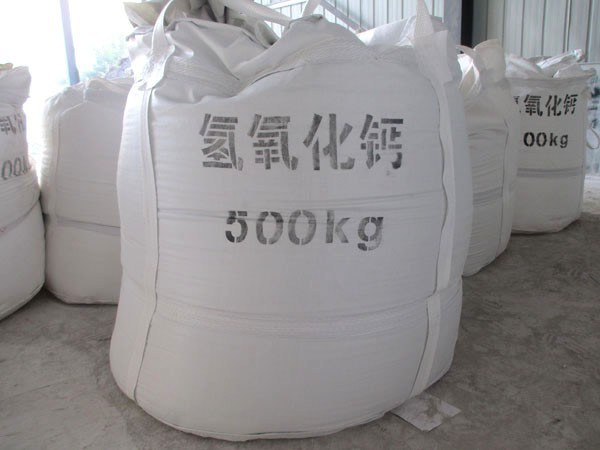
Flue gas desulfurization:reacts with SO₂to generate calcium sulfite(Ca(OH)₂+SO₂→CaSO3+H₂O),which is further oxidized to gypsum for use in building materials.
Wastewater treatment:Settling heavy metals(such as Cu²⁺+Ca(OH)₂→Cu(OH)₂↓+Ca²⁺),or using them as coagulants to improve water quality.
Food industry:used as an acidity regulator(E526)for brewing,sugar production,and tofu solidification.
In the field of medicine:prepare Ringer's solution(a physiological saline substitute containing Ca(OH)₂)or topical disinfectant.
Archaeological protection:used for deacidification treatment in cultural relic restoration.
Key difference:Quicklime is mostly used in scenarios that require strong alkalinity or high-temperature reactions,while hydrated lime is more suitable for fields that come into contact with organisms or food due to its lower corrosiveness.
In summary,the vast majority of lime that we directly come into contact with and use in our daily lives is hydrated lime.And quicklime is mainly used as an industrial raw material and desiccant.


