


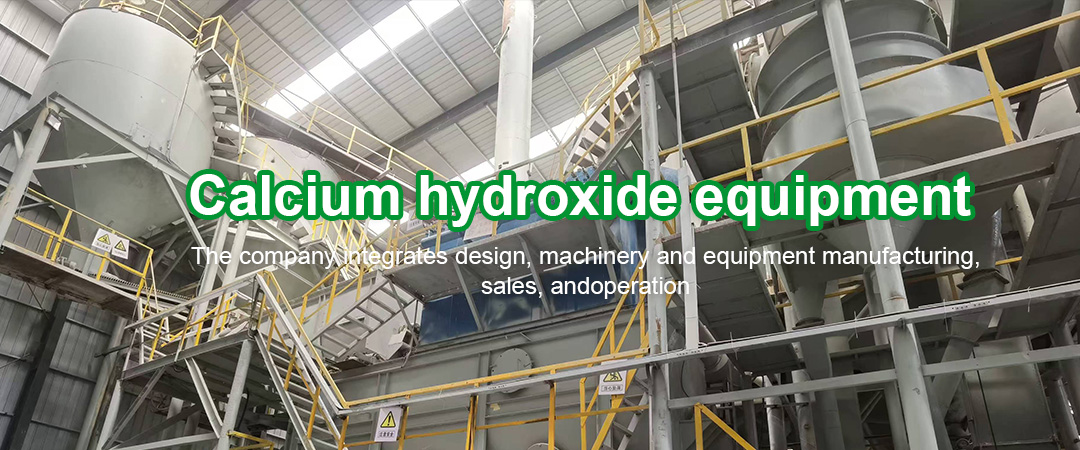
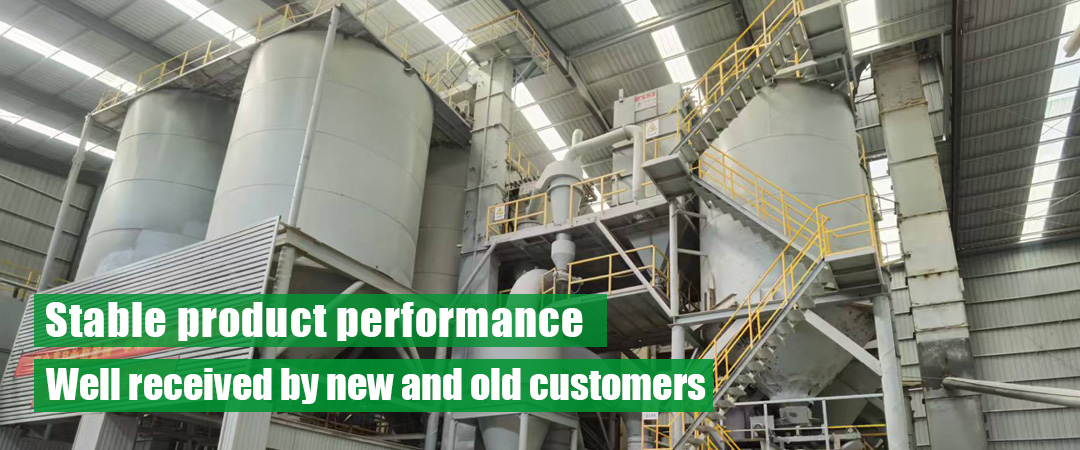
What is a calcium hydroxide production line?
Calcium hydroxide, commonly known as hydrated lime or hydrated lime, is a key industrial raw material widely used in environmental protection, chemical industry, construction, metallurgy and other fields. An efficient and automated calcium hydroxide production line is the core of ensuring product quality, improving production efficiency, and reducing operating costs. This article will delve into the process flow, core equipment composition, technical advantages, and selection points of the calcium hydroxide production line, providing you with comprehensive decision-making references.
1.What is a calcium hydroxide production line?
The calcium hydroxide production line refers to a complete production system that processes the main raw material quicklime (calcium oxide, CaO) into calcium hydroxide (Ca (OH) ₂) powder or slurry that meets specific industrial standards through a series of precisely controlled physical and chemical reactions. It is not a single machine, but a complex system engineering that integrates crushing, digestion, refining, drying, storage, and packaging.The design concept of modern calcium hydroxide production lines has shifted from the early extensive, high pollution, and high-energy consumption intermittent production to an advanced manufacturing mode that is continuous, automated, environmentally friendly, and intelligent. Its ultimate goal is to minimize resource and energy consumption while ensuring high activity, high whiteness, and low impurity content of the product, and meet strict environmental emission standards.
For investors, choosing a technologically advanced and reasonably configured calcium hydroxide production line is the key to winning market competition and achieving long-term economic benefits.
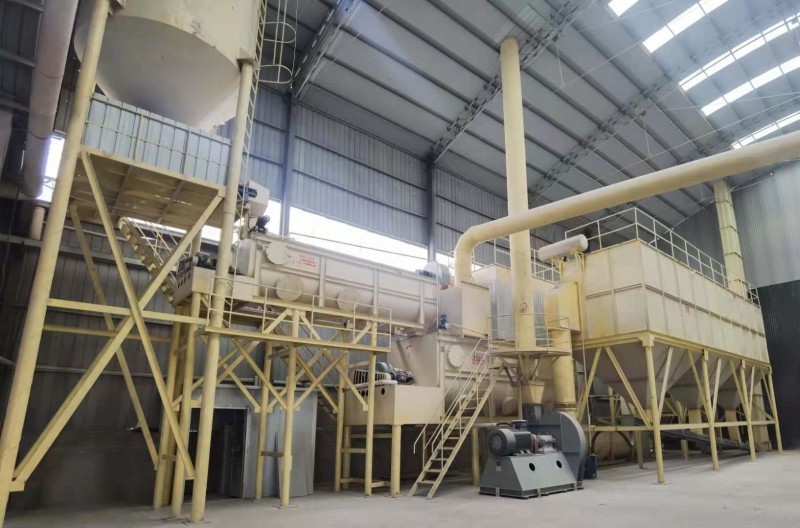
2. The core process flow of calcium hydroxide production line
A complete calcium hydroxide production line can be clearly divided into the following key stages in its process flow:
1. Raw material pretreatment and feeding system
-Core task: Ensure that the particle size and purity of the quicklime raw materials entering the production line meet the requirements.-Process: The purchased block shaped quicklime is first subjected to preliminary crushing by a jaw crusher, crushing it into small pieces suitable for digestion (usually 1-5cm). Subsequently, it is transported to the raw material warehouse for temporary storage through a bucket elevator or belt conveyor. The precise control of this stage lays the foundation for stable and efficient digestion reactions in the future.
2. Digestive and Aging System
-Core task: Complete the chemical conversion from calcium oxide (CaO) to calcium hydroxide (Ca (OH) ₂), which is the "heart" of the entire production line.-Process:
Quantitative feeding: By using a vibrating feeder or a trough feeder, crushed quicklime is continuously and uniformly fed into the digestion machine in the optimal ratio with hot water precisely controlled by a flow meter.
Digestive reaction: In the digestive machine, a violent exothermic reaction occurs: CaO+H ₂ O → Ca (OH) ₂. Modern high-efficiency digestion machines adopt a multi-stage stirring or rotary drum structure, which ensures the maximum digestion rate of calcium oxide and generates fine particles of hydrated lime powder by precisely controlling the reaction temperature, water addition ratio, and residence time.
Chenhua: The material discharged from the digestive machine may contain a small amount of incompletely digested "burnt" or "heart forming" particles. Therefore, the material will enter the aging warehouse for several hours of static aging, allowing the residual calcium oxide to fully react with water, further enhancing the overall activity of the product.
3. Refining and Grading System
-Core task: Remove impurities and grade calcium hydroxide powder according to particle size requirements.-Process: The aged material may contain undigested calcium oxide nuclei, burnt particles, and other mechanical impurities. At this point, the material will enter the powder selector or cyclone separator. By using the principle of airflow separation, qualified fine powder is separated from coarse particles and impurities. Coarse particles can be returned to the digestive system or processed as by-products. For products that require extremely high whiteness, deep purification processes such as water washing and flotation will also be added.

4. Finished product processing and packaging system
-Core task: Store, moisture-proof, and quantitatively package finished calcium hydroxide.-Process:
For the dry process, the refined calcium hydroxide fine powder is sent to the finished product warehouse by an air flow conveying system or a screw conveyor. The finished product warehouse needs to be equipped with dust collectors and air drying devices to prevent products from absorbing moisture and clumping. Finally, quantitative packaging is carried out using a fully automatic packaging machine (valve bag packaging machine or ton bag packaging machine).
For slurry products: If lime slurry needs to be produced, the digested material will be directly sent to the emulsification tank or slurry mixing tank, mixed with sufficient water to form a slurry of a certain concentration, and then sold by tanker trucks or barrels.
3.Core equipment composition of calcium hydroxide production line
An efficient calcium hydroxide production line consists of the following key equipment linked together:1. Crushing equipment: Jaw crusher, responsible for crushing large limestone blocks to a particle size suitable for digestion.
2. Feeding equipment: vibrating feeder, belt scale, ensuring accurate and stable ratio of raw materials to water.
3. Core reaction equipment: Efficient digestion machine is the most critical equipment that determines product quality and production efficiency. Its performance directly affects digestion rate, product fineness, and production capacity.
4. Separation and classification equipment: powder selection machine, cyclone separator, used for product particle size control and impurity removal.
5. Conveying and lifting equipment: bucket elevator, screw conveyor, belt conveyor, connecting various process links to achieve material flow.
6. Dust removal and environmental protection equipment: Pulse bag dust collectors are distributed in various dust production points such as crushing, digestion, and packaging, and are essential systems for achieving green production and meeting environmental protection requirements.
7. Automation control system: PLC central control cabinet is the "brain" of modern production lines. It monitors and automatically adjusts the operating parameters of the entire production line (such as temperature, water volume, flow rate, equipment status) in real time through sensors and computer programs, ensuring stable production and significantly reducing manual intervention.
4. The prominent advantages of modern calcium hydroxide production lines
Compared with traditional simple production lines, modern calcium hydroxide production lines have unparalleled advantages:1. High product quality: Through precise process control and efficient refining system, the product activity can reach over 90%, with uniform particle size and low impurity content, which can meet the demanding requirements of high-end application fields.
2. High production efficiency: The continuous assembly line operation avoids the waiting time of traditional intermittent production, greatly increases the production capacity per unit time, and can easily achieve an annual output of tens of thousands or even hundreds of thousands of tons.
3. Low operating costs: High degree of automation reduces a significant amount of labor costs. Meanwhile, the enclosed production and efficient dust removal system reduce raw material waste and decrease material loss.
4. Excellent environmental performance: The entire line adopts a closed design and multi-point dust removal, with dust emission concentrations far below national environmental standards, creating a clean and dust-free production workshop.
5. Excellent operational stability: The equipment structure is sturdy, the process flow is reasonable, and coupled with automated monitoring, it can ensure long-term, stable, and continuous operation of the production line with a low failure rate.
6. Flexible product adaptability: By adjusting process parameters, different fineness and grade calcium hydroxide products can be produced on the same production line to meet diverse market demands.
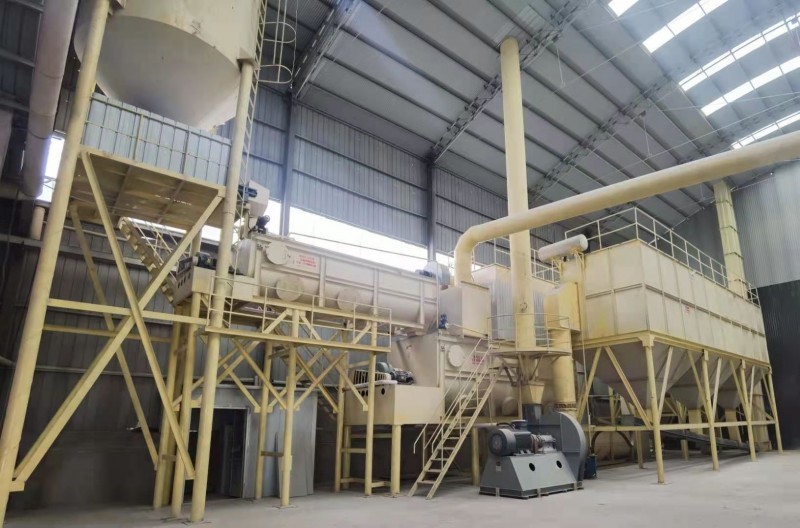
5.Key considerations for choosing a calcium hydroxide production line
Before investing in a calcium hydroxide production line, a comprehensive evaluation must be conducted:1. Capacity demand: Based on the size of the target market, determine the annual or hourly production capacity of the production line (such as 50000 tons, 100000 tons, etc.), which is the primary factor determining equipment selection and investment scale.
2. Raw material quality: Analyze the purity, activity, and block size of the quicklime used, which will directly affect the design of pretreatment and digestion processes.
3. Product standards: Clarify whether the target product is intended for ordinary buildings or high demand fields such as environmental desulfurization and fine chemicals. Different standards determine the configuration level of the production line, especially the complexity of the refining process.
4. Automation level: Determine whether to use fully automatic, semi-automatic, or manual control level based on investment budget and employment strategy. In the long run, the return on investment is higher with full automation.
5. Energy and environmental requirements: Evaluate the local energy (electricity, water) costs and environmental regulations, and select equipment with low energy consumption and excellent environmental performance.
6. Comprehensive strength of suppliers: Choose equipment suppliers with rich experience, mature technology, and comprehensive after-sales service. They can not only provide reliable equipment, but also offer a complete solution from factory design, installation and commissioning to personnel training.
For investors who aspire to occupy a place in the calcium hydroxide and its downstream industries, a deep understanding of the production line's processes and equipment, and making wise investment decisions, is undoubtedly a solid cornerstone on the road to success.


