


4 key points for choosing a calcium hydroxide powder separator
The calcium hydroxide powder separator is the core grading equipment in the production process of calcium hydroxide, and its performance directly determines the fineness, purity, and production efficiency of the finished product. An efficient separator can not only accurately separate powders of different particle sizes, but also significantly reduce energy consumption, improve product quality stability, and reduce environmental pollution. With the widespread application of calcium hydroxide in environmental protection, building materials, chemical industry and other fields, the requirements for separator technology are also increasing. This article will systematically analyze the five key considerations for selecting a calcium hydroxide powder separator, providing comprehensive reference for your equipment selection.
1. Separation efficiency and accuracy: the core determining product quality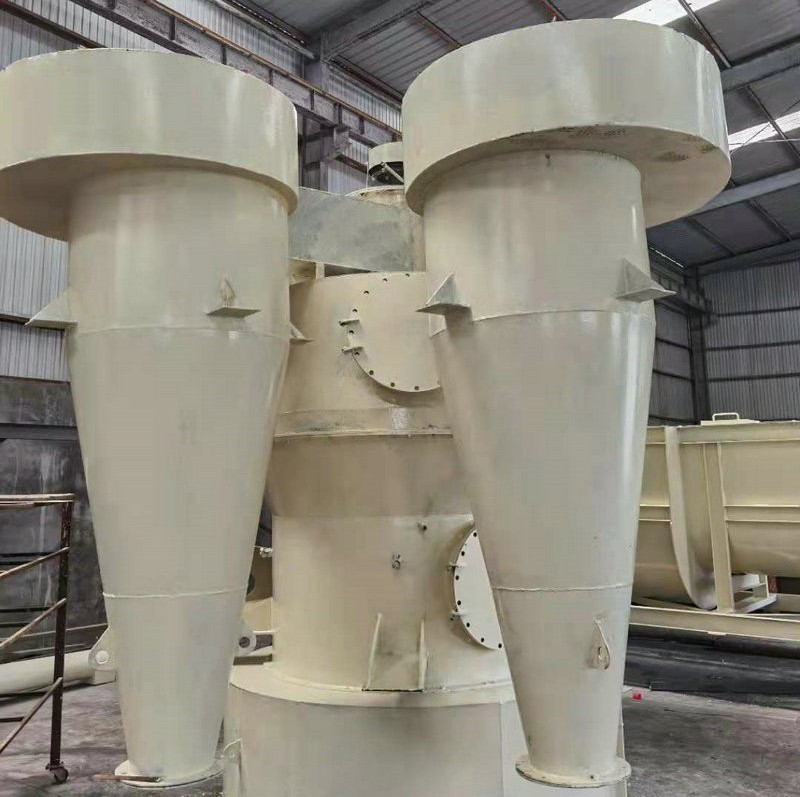
Separation efficiency and accuracy are the primary indicators for measuring the performance of calcium hydroxide powder separators, directly related to the particle size distribution and reaction activity of the finished product. Efficient separators can ensure optimal performance of products in specific application scenarios.
1.1 The Art of Balancing Powder Selection Efficiency
The efficiency of powder selection directly affects the stability of the entire production system and product quality. Research has shown that powder selection efficiency that is too high or too low is not ideal. Low powder selection efficiency will limit the output of the mill and restrict the overall production capacity; If the powder selection efficiency is too high, it will result in a large proportion of particles with a size of 30-80 μ m in the finished product, reducing the specific surface area of calcium hydroxide and affecting its strength and effectiveness. The optimal powder selection efficiency should be precisely regulated based on the target fineness and application field of the product, to find the balance point between quality and yield.
1.2 Precise design of critical particle size
The critical particle size is a key parameter in separator design, which determines the accuracy and range of separation. Regarding the recovery and purification of calcium hydroxide from carbide slag, research has shown that a critical particle size of 80 μ m is more suitable for separation. The determination of this parameter is based on qualitative and quantitative analysis of carbide slag, as well as in-depth research on the distribution pattern of Ca (OH) ₂ in various particle size ranges. For the production of ordinary calcium hydroxide, the selection of critical particle size needs to be adjusted according to the intended use of the final product - fine chemical applications usually require smaller critical particle sizes, while the construction industry can relax the requirements appropriately.
1.3 Innovative Design of Material Spraying System
Traditional feeding trays often suffer from uneven feeding and powder agglomeration, which affects the sorting efficiency. The innovative design of double-layer wolf toothed stick style scattering blades can effectively improve this problem and enhance sorting uniformity. This structure is usually made of round or square steel and is divided into an upper feeding tray and a lower feeding tray, which are fixed together at the lower end of the main shaft of the powder selection machine. The integrated grading ring design with vertical and tapered grids can increase the required air volume for powder selection under a certain wind pressure, further enhancing the sorting efficiency.
1.4 Wind speed regulation and particle size control
The airflow velocity inside the separator is one of the key factors in controlling the fineness of the finished product. A high-quality calcium hydroxide powder separator should have a convenient and reliable wind speed adjustment function to control the fineness of the finished product by adjusting the wind speed. Generally speaking, the inlet velocity design can achieve good separation effect under the working conditions of 15 m/s~30 m/s. For the production of high specific surface area calcium hydroxide, higher sorting accuracy is required. In this case, it is particularly important to choose a specialized powder selection system with fast airflow speed and good centrifugal collection effect. It can ensure that the fineness of 500 mesh reaches 98% sieving rate, while reducing the probability of secondary collision and ensuring the purity of the powder.Table: Separation Requirements and Application Fields of Calcium Hydroxide with Different Particle Sizes 2. Structural Design and Material Selection: Fundamentals of Equipment Stability
|
Particle Size Range |
Separation Requirement |
Main Application Areas |
|
<30μm |
High - precision separation |
High - end chemical industry, pharmaceutical industry |
|
30 - 80μm |
Standard - precision separation |
Environmental protection desulfurization, water treatment |
|
>80μm |
Ordinary separation |
Construction, subgrade treatment |
2. Structural design and material selection: the foundation of equipment stability
The structural design and material selection of the separator directly affect the service life, maintenance frequency, and operational stability of the equipment. Reasonable structural design can optimize the internal flow field, while high-quality materials can resist the corrosiveness and wear of calcium hydroxide.
2.1 Structural optimization of cyclone separator
Cyclone separator is a commonly used equipment for separating calcium hydroxide, and its structural parameters have a significant impact on the separation efficiency. Research has shown that a cyclone separator with a diameter of 1760 mm, combined with a cylinder height of 1716 mm, inlet size of 704 × 352 mm, exhaust pipe diameter of 688 mm, bottom flow port diameter of 544 mm, exhaust pipe insertion depth of 832 mm, and a cone angle of 13 °, can achieve effective separation under specific operating conditions. Further structural optimization also includes the addition of a guide vane device in the cyclone separator. Research has shown that when the blade length is 880 mm and the number of blades is 6, the comprehensive performance of the cyclone separator is optimal, which can effectively reduce pressure drop and dynamic pressure loss.
2.2 Structural innovation of powder selection room
As the core area of the sorting process, the structure of the powder selection chamber directly affects the sorting efficiency. Transforming the traditional cylindrical powder selection chamber into a combination of double conical frustum and cylinder can significantly improve the diffusion and classification of dust containing gases and the recovery ability of larger particles. This spacious powder selection chamber design not only improves the powder selection capacity per unit cross-sectional area, but also makes the outlet air duct of the powder separator smoother. The structure of the outlet gathering cyclone separator further optimizes the airflow path and improves the overall sorting efficiency.
2.3 Wear resistant materials and anti-corrosion treatment
The production environment of calcium hydroxide has high wear resistance and certain corrosiveness, which puts high demands on the material of the calcium hydroxide powder separator. Key components such as the feeding tray, inner lining plate, and cyclone should be made of wear-resistant materials such as high chromium cast iron, wear-resistant ceramics, or special alloy steel to extend the service life of the equipment. For the separation of special raw materials such as carbide slag, the corrosion resistance of the material should also be considered. Suitable stainless steel materials should be selected or surface anti-corrosion treatment should be carried out to ensure the stable operation of the equipment under harsh working conditions.
2.4 Anti adhesion and anti blocking design
Calcium hydroxide has a certain viscosity and is prone to adhere and accumulate on the surface of equipment, leading to blockage problems. Excellent separators will adopt anti adhesion design, such as patented water mist dust removal and pipeline sidewall water film anti adhesion technology, effectively preventing calcium hydroxide from sticking to the internal wall surface. At the same time, a reasonable structural design ensures that there are no dead corners where materials accumulate inside the equipment, reducing the frequency of regular cleaning and maintenance workload. For some specially designed separators, they belong to static grading and dispersing equipment, with no moving parts, reliable and stable operation, which is more conducive to the smooth operation of the system.
3. Energy consumption and stability: economic considerations for long-term operation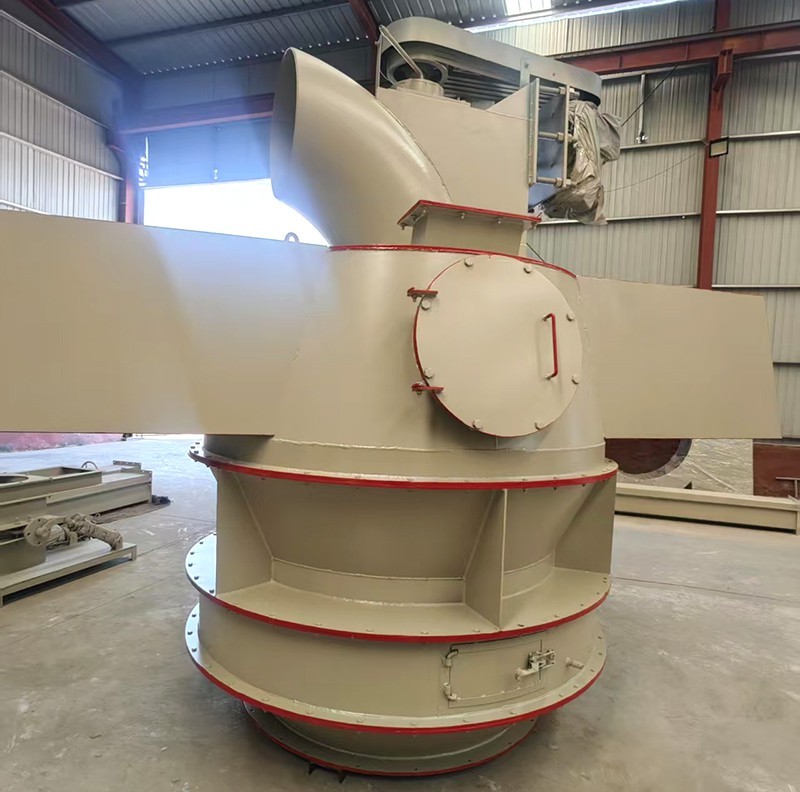
The energy consumption level and operational stability of the calcium hydroxide powder separator are directly related to the long-term control of production costs and the maximization of economic benefits. An excellent separator should ensure separation efficiency while minimizing energy consumption and maintaining continuous and stable operation.
3.1 Pressure drop control system
Pressure drop is a key indicator for measuring the energy consumption of a separator, which directly affects the power consumption of the system fan. By optimizing the design of the guide vane device, pressure drop can be significantly reduced and energy consumption can be minimized. Research shows that as the number of guide vanes increases, the rotational flow velocity inside the cyclone separator continuously decreases, further reducing the dynamic pressure loss. At the same time, choosing a separator model with low air volume and low pressure drop loss can also help control energy consumption and improve the economy of the entire production system.
3.2 Power configuration and energy-saving design
The power configuration of the separator should match the processing capacity and accuracy requirements to avoid the waste phenomenon of "big horse pulling small car". Modern high-efficiency calcium hydroxide powder separators typically adopt a reasonable engine power configuration, such as an 18.5kw engine power suitable for medium-sized processing equipment. In addition, energy-saving design is also reflected in the structural optimization of equipment, such as the application of integrated selection and grinding machines. It adopts mature technology design, high production capacity and has been serialized, and can be flexibly adjusted within the range of fineness and purity. At the same time, it controls the powder content of slag discharge, matches process dust removal, reduces powder content, and achieves energy-saving goals.
3.3 Intelligent Control System
Intelligent automatic control is an important means to improve the stability and efficiency of separators. The advanced calcium hydroxide powder separator is equipped with a PLC automation control system to achieve automatic oil lubrication and remote monitoring and control functions. The production line is equipped with advanced functions such as one click or zone start stop, fault warning and linked stop, maintenance information and capacity display, supporting monitoring and adjustment of the entire production process. This intelligent control system not only improves the stability and operability of the production process, but also effectively reduces labor costs and human errors, significantly reducing operating costs in the long run.
3.4 Modularity and ease of maintenance
The use of modular design for calcium hydroxide powder separators can significantly reduce maintenance time and costs. This design allows for quick replacement of vulnerable parts and reduces downtime. For example, some separators adopt structural breakthrough design, with few uncontrollable heat dissipation points and excellent temperature retention ability, suitable for high-quality and high specific meter production conditions. At the same time, the investment cost of patented products is low, and the production capacity and equipment volume can be customized. They come with insulation layers and temperature sensing devices, which greatly reduce the investment cost of steel structures/foundations/factories in the production line. It is estimated that nearly one million yuan can be saved. The convenience of maintenance is also reflected in the simplicity of the equipment structure. The design of wear-resistant components with a long service life can reduce replacement frequency and improve equipment utilization.
4. Supplier selection and technical evaluation: ensuring long-term cooperation value
The technical strength and service quality of suppliers directly affect the rationality of the selection, installation quality, and long-term maintenance guarantee of calcium hydroxide powder separators. Choosing suitable suppliers and technical teams can avoid many follow-up problems and ensure the stable operation of the production line.
4.1 Supplier Qualification and Experience Evaluation
When choosing a supplier of calcium hydroxide powder separators, priority should be given to companies with rich production experience, corresponding production qualifications, and quality management certifications (such as ISO9001). Suppliers with years of experience and good industry reputation in the field of powder equipment usually have the technical ability to meet different needs. It is recommended to comprehensively understand the equipment quality and after-sales service level by examining the supplier's market reputation and customer evaluation. You can refer to the evaluations of existing customers, or choose suppliers with good reputation in the industry through feedback from industry forums and procurement platforms.
4.2 Technical Support and After sales Service
Comprehensive after-sales service and technical support are important factors in evaluating suppliers. Excellent suppliers can provide full process services from selection, installation and commissioning to after-sales maintenance. Specifically, this includes: installation and debugging of production lines, technical training, and post maintenance services. Suppliers with comprehensive after-sales service can respond quickly when equipment malfunctions, helping companies minimize downtime as much as possible. In addition, excellent suppliers usually provide technical training and continuous support to help companies master equipment operation and maintenance skills, and improve production efficiency.
4.3 Cost performance analysis of equipment
When choosing a separator, a comprehensive cost-effectiveness analysis is needed, not just comparing the initial purchase price. High cost-effective equipment should have the following characteristics: a stable calcination system that can accurately control the calcination temperature and time, improve calcination efficiency, and have good energy consumption control; The efficient grinding and grading system has the characteristics of high efficiency and energy saving, and has the function of adjusting particle size; An environmentally friendly dust removal system can ensure that dust emissions during the production process comply with national environmental standards. Only by considering both price and maintenance costs can we choose production line equipment that truly offers high cost-effectiveness.
4.4 Assessment of Technological Innovation Capability
The technological innovation capability of suppliers directly affects the continuous improvement of equipment performance. Choosing suppliers who have been deeply involved in the field of calcium hydroxide powder for many years, have undergone extensive visits, research, and on-site observations, and have worked with users to design, improve, and practice periodically, can obtain equipment that better meets production needs. These types of suppliers usually have a deep understanding of the physical and chemical properties in the production of calcium hydroxide powder, and can refine the design of process equipment based on the powder application and equipment operating conditions, providing customers with effective solutions.
5. Future development trend: towards next-generation separation technology
The technology of calcium hydroxide powder separator is rapidly developing towards intelligence, high efficiency, and green direction. Understanding future trends helps maintain technological foresight when choosing equipment, ensuring the long-term value of investments.
5.1 Deep integration of intelligence and automation
In the future, calcium hydroxide powder separators will pay more attention to the integration of intelligent control and automated regulation functions. The advanced separation system will be equipped with sensor networks and adaptive algorithms, which can monitor the characteristics of raw materials and changes in product fineness in real time, automatically adjust operating parameters to achieve the best sorting effect. This intelligent system can not only improve product quality stability, but also automatically optimize energy consumption according to changes in production demand, significantly reducing the intensity of manual intervention and improving overall production efficiency. Intelligent control systems that support monitoring and regulation of the entire production process have become a trend in the industry.
5.2 Nano level precision separation technology
With the expansion of the application of calcium hydroxide in high-end fields, the demand for nanoscale calcium hydroxide in the market is increasing, which is driving the development of high-precision separation technology. By improving the grading circle structure, such as adopting a design that integrates vertical and tapered grids, the required air volume for powder selection can be increased under a certain wind pressure, creating conditions for nanoscale sorting. At the same time, the new type of feeding tray design improves the uneven feeding and powder agglomeration phenomenon, providing technical possibilities for precise separation of ultrafine powders. These technological innovations enable the separator to meet higher standards of granularity control requirements.
5.3 Green Environmental Protection and Energy saving Design
Environmental protection and energy conservation will become the core considerations in the design of separators. Future devices will place greater emphasis on low-energy operation and environmental friendliness. The integration of efficient dust removal systems enables the processed dust emissions to exceed the latest national emission standards, almost reaching zero emissions. At the same time, innovative designs such as pulse water mist digesters have achieved heat recovery and utilization, promoting digestion and decomposition, which not only improves energy utilization efficiency but also reduces environmental impact. The combination of low-energy calcination technology and efficient dust removal system can significantly reduce dust emissions, meet environmental standards, and significantly reduce production costs.
With the continuous advancement of technology, calcium hydroxide powder separators are developing towards greater intelligence, precision, and environmental friendliness. Only by grasping technological trends and combining them with one's own production needs can the most reasonable equipment selection decisions be made, laying a solid foundation for the sustainable development of the enterprise.


